When a product developer in Chicago moved a plant-based chili from a kitchen batch to a production kettle, she kept the seasoning blend unchanged but saw the protein pieces break into fines before the first fill. It initially looked like an ingredient-quality problem. The bench review pointed elsewhere: a low-density, large-format piece had been put through a long, high-shear wet process. The failure came from the specification and process fit, not from dry-piece appearance alone.
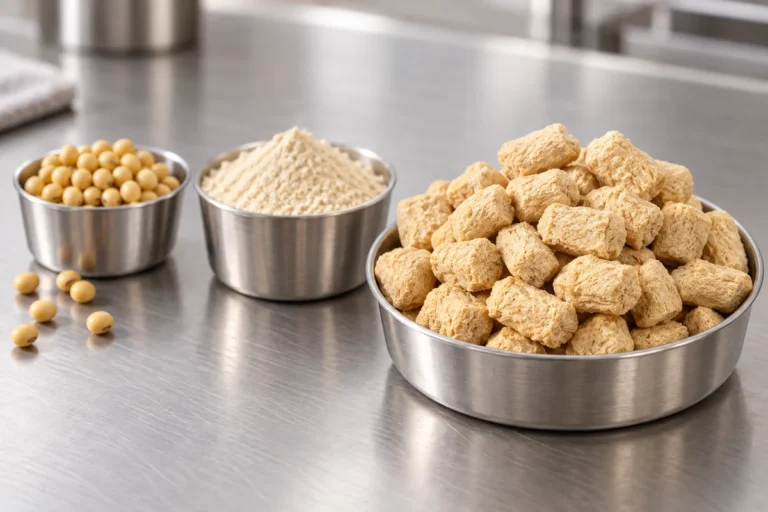
Resumen: Choose fibrous soy protein from the finished eating experience backwards: align shape, particle size, density and expected process exposure before comparing dry samples. Codex defines soy flour, concentrate and isolate at 50%, 65% and 90% minimum protein on a dry basis, respectively; those categories provide useful raw-material context but do not predict a textured product’s bite. Run a controlled pilot using the intended hydration, shear and hold time, then place measurable acceptance criteria in the purchase specification.
Textured soy ingredients can give a formula a shredded, minced, flaky or whole-cut impression after hydration. Their contribution is not limited to protein: the selected format must carry water, oil and seasoning while retaining enough structure through mixing, cooking and holding. That makes format selection a joint decision for R&D, operations and procurement.
Raw-material basis and extrusion create the starting point for that decision. Soy flour, concentrate and isolate are distinct Codex categories, while extrusion develops the porous, fibrous structure that later governs water movement and mechanical response. Ask suppliers to identify the raw-material basis, particle-size range and handling instructions; visually similar dry pieces can behave differently once hydrated.
How should you match protein shape to the finished application?
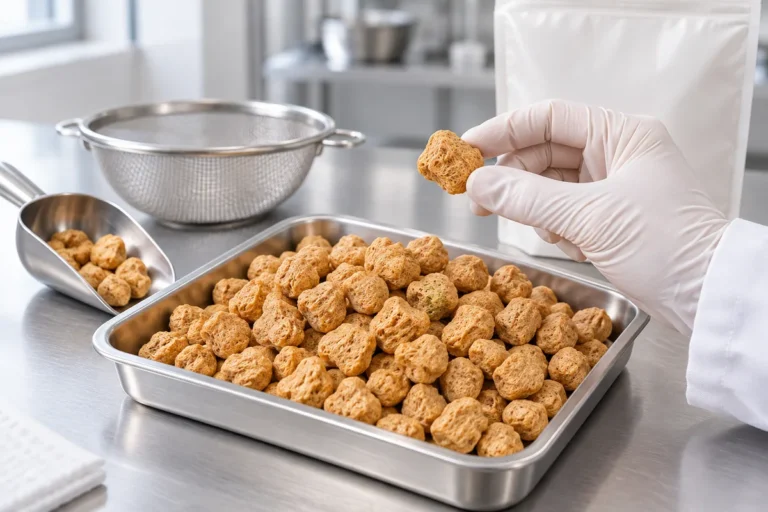
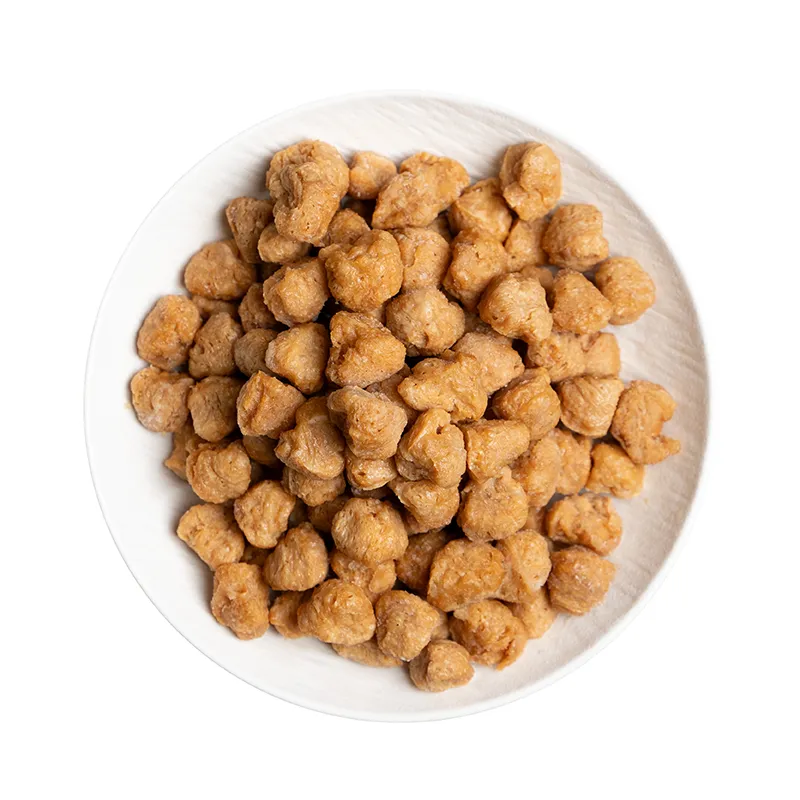
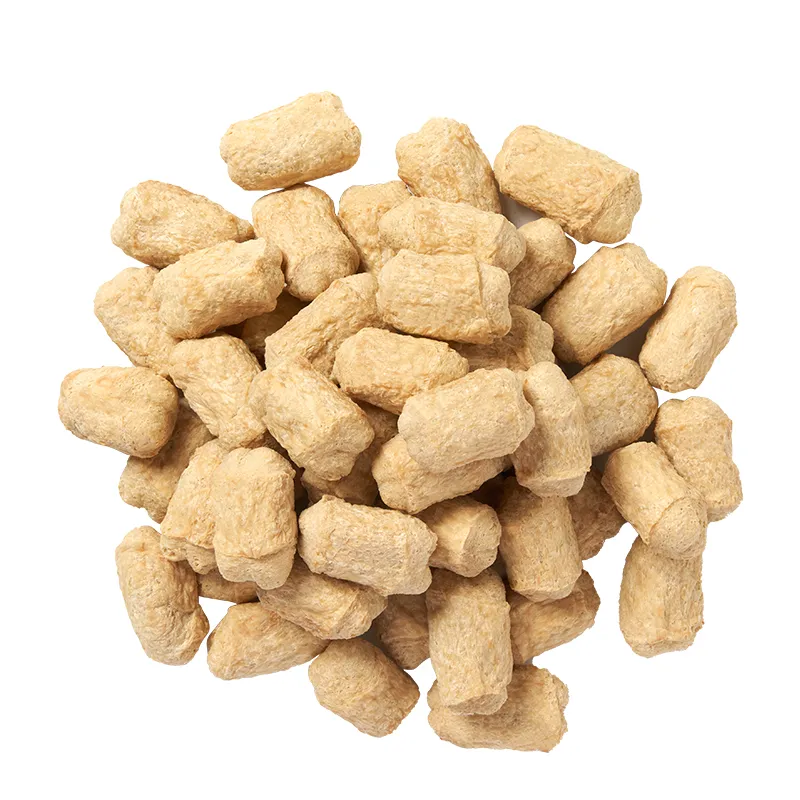
Soy protein chunks are a practical starting point for chili, braises, prepared meals and fillings where a distinct piece should remain visible. They may tolerate gentle folding better than a fine format, but can still break after hydration when exposed to prolonged high-speed mixing. Request the particle-size range and evaluate the material after the real cook-and-hold cycle, not from a dry sample alone.
Soy protein flakes suit layered or shredded-style textures in sauces, wraps and formed fillings. Their higher exposed surface can help seasoning contact, but it also makes them more responsive to excess water and aggressive agitation. They are usually a better fit where a pulled appearance and flavour distribution matter more than identical piece geometry.
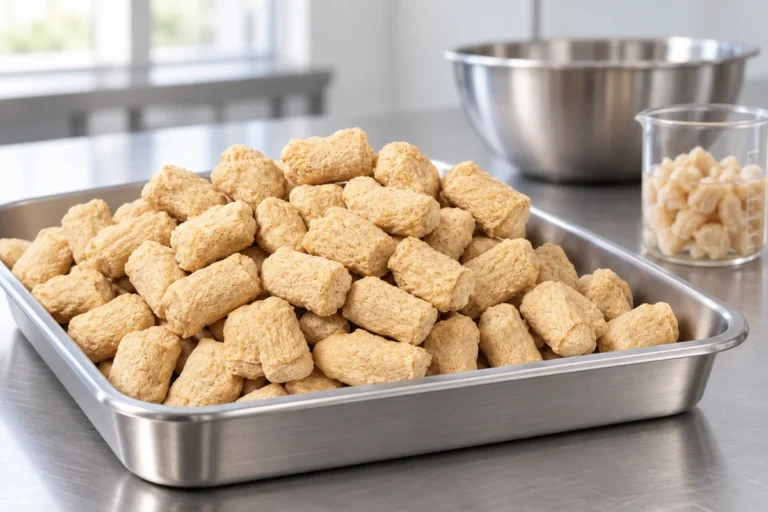
Bien soy protein granules can work well when a mince-like texture must distribute through a sauce, patty or stuffing without appearing as a separate inclusion. Their smaller particle size can improve distribution, but it calls for staged water addition and low-shear incorporation. Soy protein steak formats, soy protein strands and soy protein cylinders are different product architectures: choose them when the finished item needs a recognisable whole-cut, pulled or sliced appearance, then confirm breakage and core hydration after processing.
| Formato | Best-fit applications | Process watch-out | Commercial implication |
|---|---|---|---|
| Trozos | Chili, stew, chunky fillings | Breakage under high shear | May reduce the need for visible-piece recovery after cooking |
| Copos | Shredded-style fillings, wraps, sauces | Fast uptake and softening | Useful where flavor distribution matters more than uniform piece geometry |
| Gránulos | Minced sauces, patties, stuffing | Clumping or overmixing | Can support even distribution in high-throughput formulas |
| Steak, strands or cylinders | Whole-cut or pulled-style concepts | Uneven core hydration; handling damage | Requires format-specific yield and integrity trials |
The hidden cost is rework, not just ingredient price. A lower-priced format can lose its advantage if it creates fines, requires extra stabilization or slows filling because operators must compensate for inconsistent hydration. An illustrative calculation should compare usable hydrated yield, breakage, line loss and seasoning uptake per finished kilogram—not only the dry purchase price.
How should hydration, density and particle size be specified together?
Hydration ratio and soak time need to be developed as one system. Start with the supplier’s preparation direction, use a measured water-to-dry-ingredient ratio, and record water temperature, soak duration, drain method and post-soak weight. Larger or denser pieces may need more time for the centre to hydrate; simply adding more water can soften the outside before the core is ready.
Density and particle size also affect how a product handles oil and sauce. A more open structure may take up marinade quickly, while a denser structure can keep a firmer bite through cooking. Neither is automatically preferable: a juicy taco filling may benefit from quick uptake, whereas a retorted meal or long-held sauce needs a format that keeps its definition under thermal and mechanical stress.
Specify the desired result in observable language—firm centre, flaky pull, cohesive mince or tender bite—and convert it into checks for hydrated piece integrity, drained yield, visual fines and texture after a defined hold. Moisture can be measured with an agreed validated method such as AOAC Official Method 925.10. Name the method in the specification, because a test method is not a product certification.
| Finished-product need | Starting format direction | Pilot acceptance check |
|---|---|---|
| Visible, forkable pieces | Medium or large chunks | Piece count and fines after cooking and filling |
| Pull-apart or shredded appearance | Copos o hebras | Separation without mushiness after saucing |
| Uniform mince-like distribution | Gránulos finos | Absence of dry cores and hydration clumps |
| Center-of-plate whole-cut look | Steak or cylinders | Core hydration and cutting/handling integrity |
How can mixing, cooking and seasoning preserve the intended texture?
Process control often decides whether a well-chosen format succeeds. Hydrate in a dedicated step where feasible, drain consistently, then add the ingredient after the highest-shear emulsification or sauce-building stage. If the product will be pumped, use the actual pump, pipe run and deposit conditions in the pilot; bench stirring cannot expose every source of breakage.
Seasoning carry depends on both surface area and the order of addition. Pre-blend dry seasonings where appropriate, introduce fat at the planned stage, and avoid extending wet mixing just to chase visual uniformity. Fine particles can disperse flavour quickly, while larger pieces need enough contact time and liquid access for consistent coverage. Record batch temperature, mixer setting, mixing time, thermal exposure and hold time so the team can separate raw-material variation from a process excursion.
For protein characterization, an agreed nitrogen-to-protein method can matter when a specification makes a protein-content claim. ISO 20483 describes a Kjeldahl method for nitrogen determination in cereals and pulses, while the applicable contract method and conversion factor should be confirmed for the material. The practical point is simple: compare supplier documents and internal checks on the same basis.
What should buyers verify before scale-up?
For U.S. foods, soy is a major food allergen that must be declared when required by the applicable labeling rules. FDA preventive-controls requirements in 21 CFR Part 117 apply according to the facility and product circumstances; they are food-safety requirements, not a certification for a textured ingredient. Destination market, intended use, formulation and front-of-pack claims all affect the final review.
Codex CXS 175-1989 provides compositional definitions for soy protein products, including the 50%, 65% and 90% dry-basis protein thresholds for soy flour, concentrate and isolate. It is not a guarantee that every textured soy ingredient meets a customer’s particle, hydration or sensory specification. Avoid calling a format “high protein,” “meat-like” or compliant with a market claim unless the formulation, analytical basis and local legal review support the wording.
Before approval, request a current specification, allergen statement, ingredient declaration, lot traceability approach, agreed analytical methods and product-specific handling instructions. A useful supplier check also compares the sample lot with the intended commercial specification, including particle range, hydration guidance, packaging condition and the documentation needed for the destination market. Review quality and safety information alongside the buyer’s own supplier-approval programme.
What is a practical buyer trial workflow?
- Write the finished-texture brief first: visible piece, shredded pull, fine mince or whole-cut presentation.
- Screen two or three formats in the actual recipe, using the intended hydration, equipment and hold time.
- Set pass/fail criteria for hydrated yield, breakage, seasoning coverage, bite and appearance after the final thermal step.
- Repeat the preferred option with the planned production sequence, pump or depositor where relevant, and retain the observations with the sample record.
- Confirm the analytical basis, allergen documentation and labelling review before making commercial claims.
BCTVP can be a practical sourcing partner when a buyer needs to compare configurable textured formats against a defined production process. Its terminology guide can help teams align language before requesting samples.
Preguntas frecuentes
Why does TVP texture change during preparation?
TVP changes as water enters its porous structure and heat, salt, fat and agitation alter its apparent firmness. Particle size, density, water temperature and soak time all influence the result. Validate the texture in the complete formula because sauce and cooking can change it again.
Why does TVP become rubbery?
A rubbery bite can come from selecting a dense format for a tender application, insufficient hydration of the center, or excessive thermal exposure. Check that water reaches the core before cooking and reduce unnecessary mixing or holding. A side-by-side pilot with a more open format can reveal whether density is the main cause.
Why does TVP become mushy?
Mushiness commonly follows too much free water, too long a soak, or extended high-shear mixing after hydration. Small particles are especially vulnerable because they have more exposed surface area. Tighten draining and add hydrated material later in the process where possible.
How can I make TVP softer after soaking?
First confirm that the center—not just the surface—has hydrated. Use the supplier’s instructions as the starting point, then test a longer controlled soak or a format with a more open structure. Avoid compensating with excessive water, which can weaken the exterior.
How do I prevent TVP from falling apart during cooking?
Choose a format sized for the intended agitation and hydrate it consistently before the most demanding process step. Reduce unnecessary shear, particularly after the pieces have softened, and test the real pump and fill conditions. Set a visual-fines limit in the finished product specification.
Can overhydration change TVP texture?
Yes. Excess water or an extended soak can make the surface soft and increase the risk of breakage during mixing and cooking. The right endpoint is the target texture after the full process, not the maximum possible water uptake. Measure drained yield and sensory performance together.
References and source material
- Codex Alimentarius: CXS 175-1989, Standard for Soy Protein Products
- U.S. eCFR: 21 CFR Part 117, Current Good Manufacturing Practice and Preventive Controls
- U.S. eCFR: 21 CFR 101.4, Food ingredient labeling
- ISO 20483:2013, cereals and pulses—nitrogen determination and crude protein calculation
The most reliable textured-protein choice is the one that still delivers the intended bite at the end of the line, not the one that looks most promising in a dry sample.
When the decision reaches sampling and specification, view BCTVP product formats y contact BCTVP to discuss your application and process requirements.