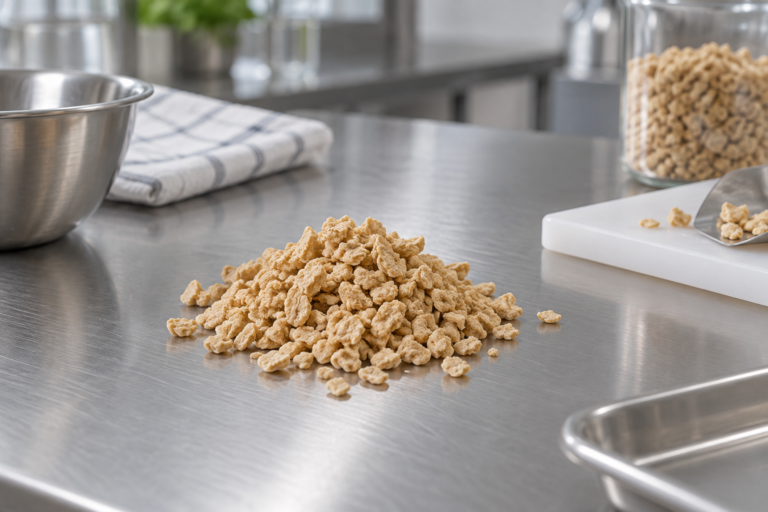
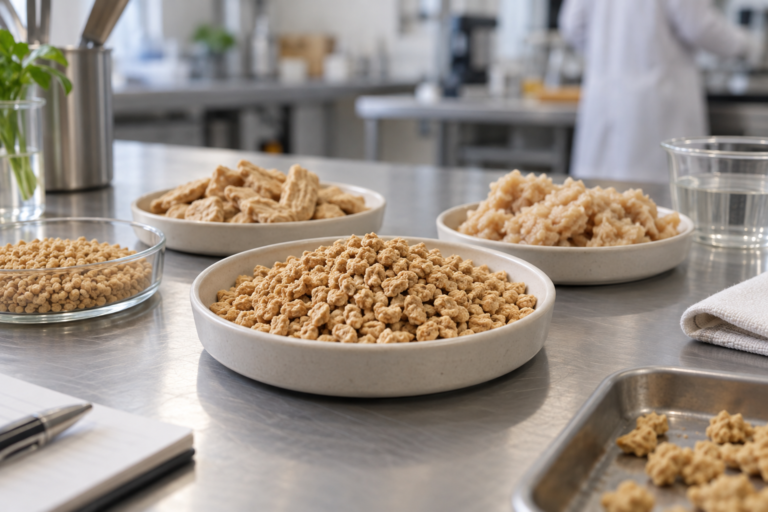
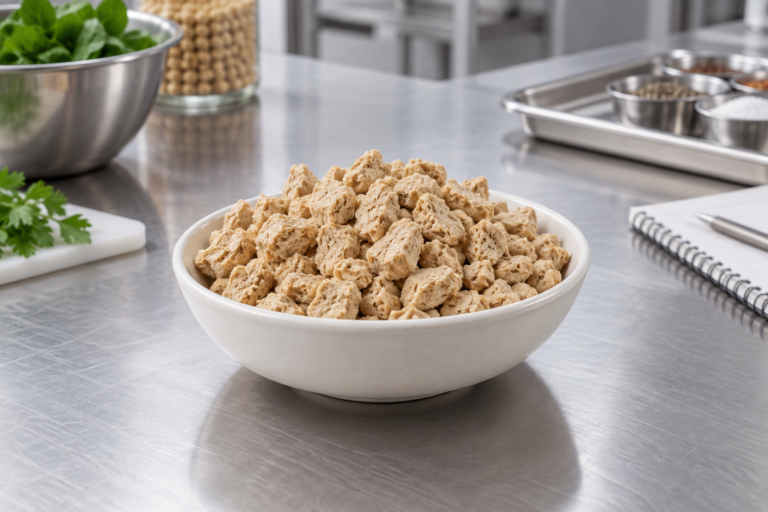
A mild soy aroma can become more noticeable when dry chunks meet hot water. It does not mean the bag is spoiled, but a strong stale, rancid or otherwise unusual smell deserves a different response: stop and check the ingredient rather than reaching for more spices.
For sound soya chunks with an ordinary beany note, start with preparation. Hydrate them properly, drain consistently and then build the flavor of the dish. Repeated long boiling is not a guaranteed improvement and can leave the outside too soft.
Is the smell a normal soy note or a reason to discard the food?
Check the date, storage instructions, packaging and appearance before tasting. Mold, damp contamination, pests, damaged packaging or a clearly rancid smell are reasons to reject the product. If you are unsure whether it is safe, do not taste it to find out. A mild familiar soy smell and an unfamiliar deterioration are not interchangeable.
Rinsing, boiling and seasoning do not restore spoiled food. A preparation method can improve the flavor of a sound ingredient; it should never be presented as a safety treatment for a suspect bag.
How should you prepare the chunks before adding a sauce?
- Read the product’s soaking or simmering instructions.
- Measure a small portion and prepare it in clean water.
- Cut a large piece open to check that the center has hydrated.
- If compatible with the instructions, try a brief rinse, then drain gently.
- Finish in the intended recipe and taste the cooked result.
For detailed preparation, use the soy-chunk cooking guide. Do not transfer a fine-granule liquid ratio to a thick chunk or a fibrous grade. The correct method depends on the product rather than the general term TVP.
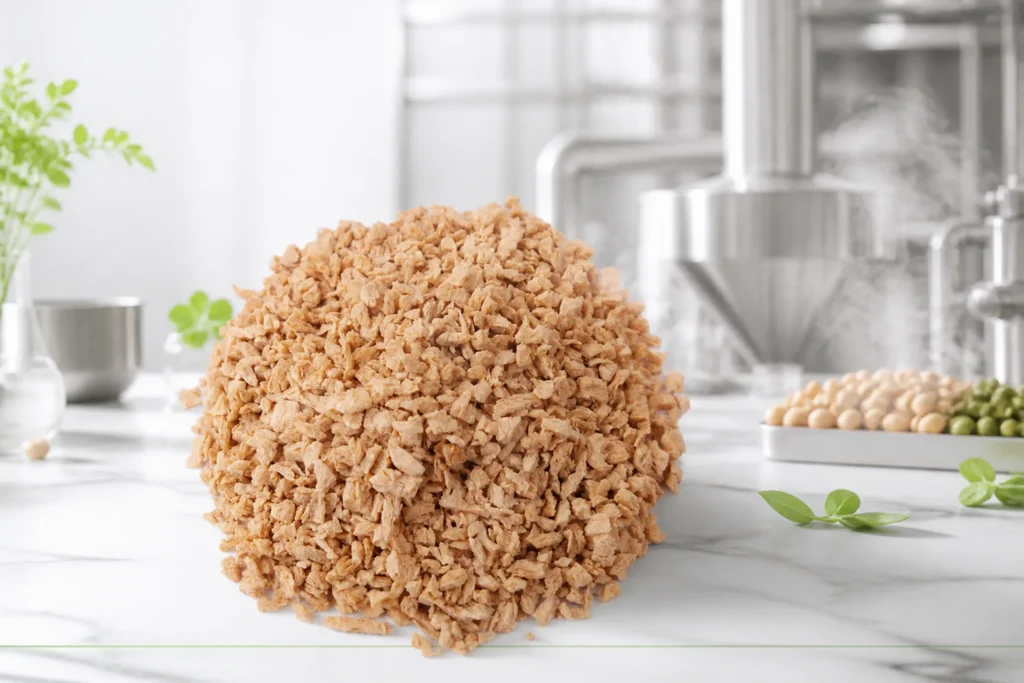
Does rinsing help, and how much should you squeeze?
A brief rinse is worth comparing if the product directions permit it and the preparation water has an unwanted flavor. It adds another handling step, so use clean equipment and avoid leaving hydrated food warm for a prolonged period. Rinsing is optional, not a universal requirement.
Drain enough loose water for the dish you are making. A filling or browned topping may need less surface water than a soup. Press gently: crushing soft pieces can destroy the texture you wanted. Keep the method consistent so differences in water removal are not mistaken for differences between brands.
Which seasonings work after the base has been prepared?
Use the flavor pattern of the dish. Onion, garlic, ginger, mushrooms, spices and a suitable broth can support a savory curry, filling or stir-fry. Soy sauce can add salt and savory flavor, but check allergens and gluten status where relevant. More salt is not always the answer.
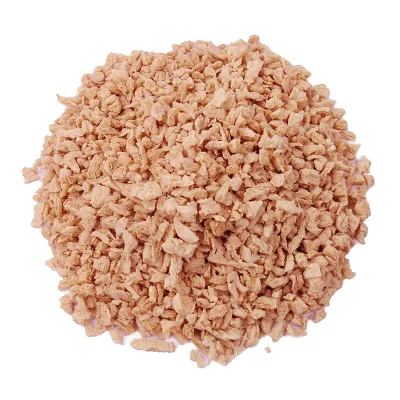
Proteína de soja texturizada also benefits from being cooked in the intended sauce rather than judged only from plain soaking water. A tomato sauce and a lightly seasoned broth expose different notes. Compare the final food at the temperature at which it will be eaten.
How can you tell whether a preparation change actually helped?
Divide one sound dry batch into equal portions. Prepare one exactly as directed and give the other one change, such as a brief rinse. Keep seasoning, cooking and serving conditions the same. Record aroma, flavor and bite separately.
| Check | What to keep the same | What to record |
|---|---|---|
| Hydration | Product, dry weight and method | Center softness and preparation time |
| Rinse comparison | Draining and final recipe | Any useful flavor change |
| Finished dish | Sauce quantity and serving temperature | Aroma, bite and aftertaste |
This is a proposed kitchen comparison, not a claim that Baichuan has measured a particular reduction. A household trial cannot establish a commercial shelf life or a universal deodorizing rate.
When is it better to change the product rather than the seasoning?
If the normal flavor remains unsuitable after correct preparation, compare another grade or format. Start with the TVP format guide, then check the sample’s own instructions. Soy protein chunks for a curry and soy protein granules for a filling may require different handling.
Beany flavor in industrial formulations involves a wider review of ingredients, storage and processing. The separate manufacturing flavor guide covers that context; this page is for preparing a sound ingredient at home.
Preguntas frecuentes
How to get the smell out of soya chunks?
Prepare the chunks according to their directions, check the center, and compare a brief rinse and gentle draining before seasoning. This can help with an ordinary soy note. It is not a way to make spoiled food usable.
Why do soya chunks smell?
Soy has a characteristic flavor that can become more noticeable during hydration. Product formulation, processing and storage also affect aroma. Smell alone cannot identify the exact cause or prove that a product is safe.
How to know if soya chunks are spoiled?
Check for mold, dampness, pests, damaged packaging and an abnormal rancid or spoiled smell, alongside the label and storage history. Do not taste suspect food. Discard it or contact the supplier if safety is uncertain.
Is it better to soak or boil soya chunks?
Use the method specified for the particular grade. Some chunks need simmering and others allow hot soaking. Prolonged boiling can soften a product too much, so more heat is not automatically better.
How to make soya chunks taste like meat?
Prepare them evenly, remove excess water as needed and cook them in a savory recipe. Aromatics, mushrooms, broth, spices and suitable fat can help build flavor, but the result depends on the whole dish and will not be identical to every meat.
What is the best way to marinate soya chunks?
Hydrate and drain first unless the product directions specify otherwise, then use a measured marinade and complete the cooking step. Keep marinating food refrigerated where required and follow the recipe’s food-safety instructions.
Does TVP go rancid?
Dry TVP can deteriorate; shelf life depends on its formulation, packaging and storage. Do not assume a low-fat product cannot develop an unpleasant stale or rancid character. Follow the date and storage guidance on the actual pack.
How many minutes should I soak soya chunks?
Follow the product instructions and inspect the thickest piece. There is no single soaking time for all soya chunks. Small granules and dense chunks should not be prepared by the same timer alone.
Referencias
- FDA: safe food storage
- Bob's Red Mill: product-specific TVP preparation example
- Baichuan: product formats
What should you change first?
Check the ingredient, follow its preparation directions and change one step at a time. Stronger seasoning belongs after those checks, not in place of them.