Is soy protein a complete protein? Yes. Soy protein contains all nine essential amino acids that the body must obtain from food. For someone cooking with textured vegetable protein, or TVP, the next question is more practical: what is in this ingredient, and how much protein will the prepared portion provide?
Start with the ingredient list and nutrition information, then measure the dry amount before hydration. This keeps soy’s amino acid profile separate from the water, sauce and other ingredients that determine the size and composition of the finished meal. It also helps you choose between small granules dispersed through a sauce and chunks served as distinct bites.
Soy supplies all nine essential amino acids
The nine essential amino acids are histidine, isoleucine, leucine, lysine, methionine, phenylalanine, threonine, tryptophan and valine. Harvard’s Nutrition Source identifies soy protein as a complete protein because it supplies all nine. You do not need to add rice or another grain to make soy protein complete.
Completeness does not mean that the amino acids occur in equal amounts, or that any serving supplies all the protein a person needs. It describes the protein’s amino acid profile, not the size of the portion. Digestibility is another consideration: the presence of essential amino acids does not by itself establish how readily a particular ingredient makes them available.
That distinction matters when buying TVP. Soy’s nutritional characteristics give you a useful starting point, but the exact textured ingredient may combine several protein sources and other ingredients. Before using a general statement about soy to describe your sauce or catering dish, check the blend you will actually prepare.
Check what is in the textured soy ingredient
Baichuans textured vegetable protein granules for sauces and fillings illustrate why the ingredient list matters. They are irregular granules with a compact structure, and their listed ingredients include soybean meal, wheat gluten, isolated soy protein and wheat flour. These are textured soy-and-wheat ingredients, not pure soy isolate.
The supplier’s fibrous soy protein chunks for catering are small, cubed pieces. Their ingredient list includes soybean meal, wheat gluten, isolated soy protein, soy protein concentrate and wheat starch. The different form helps identify their intended culinary role, but neither the cube shape nor the word “soy” establishes the blend’s amino acid score.
| Zutatenwahl | Relevant product facts | What those facts mean for your dish |
|---|---|---|
| Granule grade | Compact, irregular granules; soy ingredients with wheat gluten and wheat flour; listed for sauces and fillings | A candidate when you want small pieces distributed through a mixture; evaluate nutrition using this grade’s data |
| Catering chunk grade | Small, cubed fibrous pieces; soy ingredients with wheat gluten and wheat starch | A candidate when the portion should contain distinct bites; record its own hydration yield |
| Either grade | Listed under the Soya Fiber Protein family | The family name is not a dietary-fiber measurement; check the nutrition specification for fiber and protein values |
Both grades contain wheat gluten, so neither is suitable for a gluten-free formulation. The granule list also ends with “etc,” making a current complete ingredient statement useful before finalizing a recipe or label. For these blends, soy’s complete profile is relevant background, but grade-specific data are needed before assigning the whole ingredient a complete-protein claim or amino acid score.
Separate protein quality from protein per serving
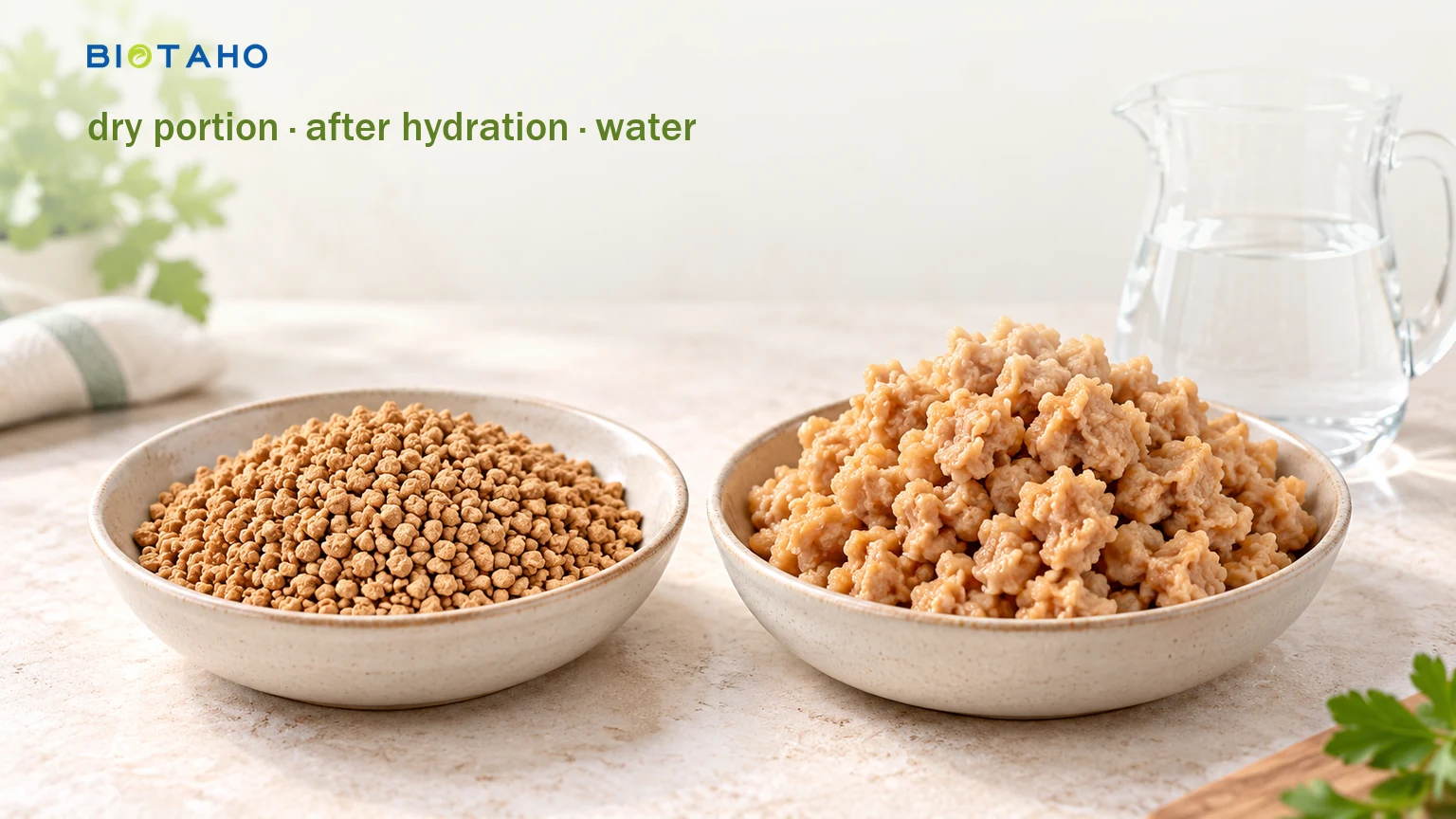
Once you know the blend, establish the basis of its nutrition information. Values for dry TVP cannot be compared directly with values for the same weight of hydrated TVP. Water increases weight and volume without adding protein, so the prepared ingredient is less protein-concentrated by weight even though the starting dry portion has not gained protein.
For a sauce trial, weigh the dry granules, prepare them as directed, and record the hydrated weight after any specified draining. For a chunk dish, make the same record separately. Different forms and draining practices can produce different prepared weights; a larger hydrated pile is not evidence of more protein.
Use the actual grade’s protein value on the stated basis to calculate the contribution from the amount used. Then account for the remaining recipe ingredients and divide by the finished yield or number of servings. If preparation includes discarding liquid, use an appropriate prepared-product specification or validated calculation method rather than assuming dry and prepared values are interchangeable.
| Measurement basis | Question it answers | How to use it |
|---|---|---|
| Dry ingredient | How much ingredient enters the batch? | Match the weighed amount to nutrition data stated on a dry basis |
| Hydrated and drained ingredient | How much prepared TVP does that dry amount yield? | Record the preparation and draining method alongside the weight |
| Finished sauce or chunk dish | What does the serving actually contain? | Include sauce, oil and other ingredients, then use the finished batch yield |
Die dry and hydrated TVP nutrition guide explains the comparison further. Without grade-specific nutrition data, you can document yield and portion size, but you cannot reliably assign protein grams to either of these ingredients.
Choose and prepare the TVP for its role in the meal
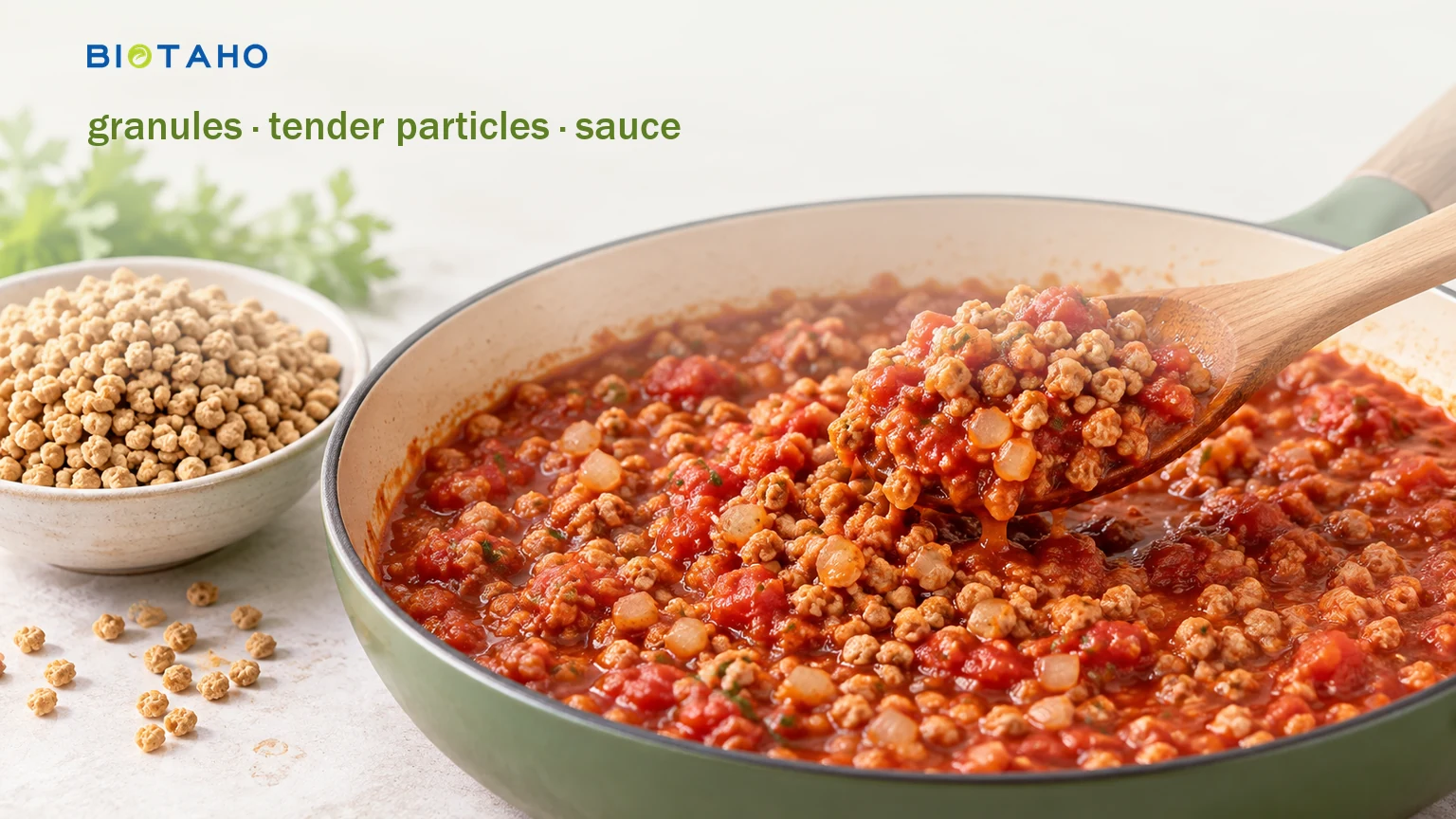
With the portion basis established, choose the form that fits how the protein should appear in the dish. For a loose tomato sauce, Sojagranulat are the more relevant starting point because the small particles can be spread throughout the sauce. Baichuan lists its compact granule grade for sauces and fillings, where distinct particles are wanted.
Hydrate according to current directions, drain if instructed, then cook with the aromatics and sauce. Look for tender particles distributed through the mixture, without dry specks or a separate watery layer. That texture assessment helps you adjust the sauce’s moisture; it does not replace the product’s cooking instructions.
For a curry or stew where each serving should contain recognizable pieces, consider Soja-Protein-Stücke. The catering grade’s cubed, fibrous form makes it a candidate for that role. Check that the centres are hydrated before finishing the dish, and account for liquid carried into the sauce. Excess retained water can loosen the sauce, while insufficient hydration can leave an uneven bite.
The supplier lists hydration windows of 40–55 minutes for the granules and 60–65 minutes for the catering chunks. Treat these as preparation lead times, separate from the dish’s cooking time. Water ratio and temperature still depend on the current grade instructions; the time window alone is not a complete method.
These application suggestions are starting points for recipe-specific trials. Keep the dry amount, hydration method and draining practice consistent while evaluating the dish. Once the texture and sauce consistency suit the meal, record the finished yield so that the portion calculation reflects what you actually serve.
Use grade-specific data for a finished-product claim
Your preparation record now connects the ingredient to the finished portion. To support an amino-acid-related claim, obtain the selected grade’s full composition, protein content on a clearly stated basis, and amino acid data. If a protein-quality score is needed, it also requires the relevant digestibility evidence and assessment method; it cannot be inferred from soy’s reputation or the product’s shape.
For a commercial sauce or catering dish, assess the actual formulation and serving size under the applicable labeling requirements. Document how much dry TVP enters the batch, how hydration and draining are controlled, and what finished yield results. A change in blend, sauce quantity or serving size can change the claim basis even when the dish looks similar.
Keep the wider nutrition assessment tied to that same recipe. Salt in the sauce, added oil and other ingredients affect the finished food independently of amino acid completeness. Research on soy foods does not establish identical health effects for every textured blend. For everyday cooking, the useful outcome is a well-prepared portion with known ingredients; for product development, that same record provides the foundation for substantiated nutrition statements.
Häufig gestellte Fragen
Does soy protein have a complete amino acid profile?
Yes. Soy protein supplies all nine essential amino acids. If you are asking whether textured vegetable protein is a complete protein, check its composition: TVP can contain soy, other proteins or blends, and a blend needs its own supporting data.
What food gives you all 9 amino acids?
Soy foods provide all nine, as do common animal protein foods such as eggs and dairy. For a textured soy dish, check the actual ingredient and portion; the amino acid profile alone does not tell you how much protein the serving supplies.
What is the healthiest complete protein?
There is no single healthiest choice for everyone. Compare the whole food and serving, including sodium, fats and fiber. In a TVP sauce, the seasoning and other ingredients matter alongside the protein source.
Who should avoid soybeans?
People with a diagnosed soy allergy should avoid the soy-containing foods they react to. Read current labels for relevant allergens; the two grades discussed here also contain wheat gluten. Suspected allergic reactions need medical evaluation, not a home trial.
Is it okay to eat soy protein every day?
Harvard describes soy foods as suitable several times a week and probably more often. That does not mean unlimited amounts of every soy blend are recommended. Consider the actual product, portion and overall dietary variety; completeness does not address every nutritional need.
Which is better, whey or soy protein?
Both can supply complete protein. Whey comes from milk, while soy is plant-derived, so allergies and dietary preferences matter. Compare actual product data and equivalent portions. A dry whey powder and a hydrated textured soy-and-wheat ingredient are not directly comparable by weight.
Hinweise
- Harvard Nutrition Source: Straight Talk About Soy — soy’s complete amino acid profile and the limits of broad statements about soy foods.
- Harvard Nutrition Source: Protein — essential amino acids and the wider nutritional components accompanying protein.
- FDA: Food Allergies—What You Need to Know — allergen labeling and avoidance guidance.
- NHS: Die vegane Ernährung — why a complete protein source does not replace varied, balanced meal planning.
For a sauce or catering formulation, contact Baichuan about a granule or chunk sample and request the grade’s current nutrition and preparation information.