Para um vegan coconut curry with tender butternut squash and distinct, chewy soy bites, prepare the chunks separately and give the squash a head start in the pan. Finish them together in coconut milk, then mash only a few squash cubes if the sauce needs more body. This keeps the curry creamy without turning all its ingredients into one soft texture.
The first decision is the protein format. Larger fibrous pieces suit this dish’s contrast; granules would distribute smaller bites throughout the sauce. Once you choose the chunks, their preparation and drained moisture become part of controlling the finished curry.
Choose soy chunks to balance the soft butternut squash
Choose cubos de proteína de soja when you want each spoonful to contain both soft squash and a separate, firmer bite. Baichuan lists its cubed fibrous soy protein for catering as small chunks with a meat-like chew. That form makes it a relevant ingredient to trial here, although the finished firmness will depend on hydration and cooking in this particular sauce.
The alternative compact textured protein granules for sauces and fillings has an irregular granular form. It would make a finer, mince-like curry, changing how the protein sits among the squash and how the sauce feels. For the distinct pieces intended in this recipe, start with chunks; do not assume granules are an interchangeable substitution.
Both products combine soy ingredients with wheat ingredients. The chunks include wheat gluten and wheat starch; the granules include wheat gluten and wheat flour. These are blends, not pure soy isolates, and neither is suitable for a gluten-free version. Check the curry paste for shrimp paste or fish sauce, use vegan stock, and check all relevant labels for soy and wheat.
The following amounts are a starting point for about four servings with rice. Use unsweetened canned coconut milk, not a coconut drinking beverage; full-fat milk gives a richer sauce. Allow roughly 45–60 minutes for the recipe work, depending on preparation and the chunks chosen, with any longer supplier-required hydration planned separately. A brand-specific version needs a recipe trial, and current product directions govern hydration and required cooking.
| Ingrediente | Suggested amount | Preparação ou propósito |
|---|---|---|
| Pedacinhos de soja secos | 80 g | Hydrate separately according to the pack |
| Butternut squash | 600 g peeled, seeded weight | Cut into even 2 cm cubes |
| Unsweetened coconut milk | 400 ml | Stir before measuring |
| Water or vegan vegetable stock | 250 ml, plus more as needed | For cooking the squash; hydration water is separate |
| Neutral oil and onion | 1 tablespoon oil; 1 medium onion | Finely chop the onion |
| Alho e gengibre fresco | 3 cloves; 1 tablespoon grated ginger | Aromatic base |
| Vegan red curry paste | 1–2 tablespoons | Start lower with a hot or unfamiliar paste |
| Spinach | 100 g | Optional leafy finish |
| Soy sauce and lime juice | 1–2 teaspoons soy sauce; 1 tablespoon lime juice | Add gradually, to taste |
| Salt, coriander and rice | As needed | Final seasoning, garnish and serving |
Prepare the protein separately from the coconut sauce
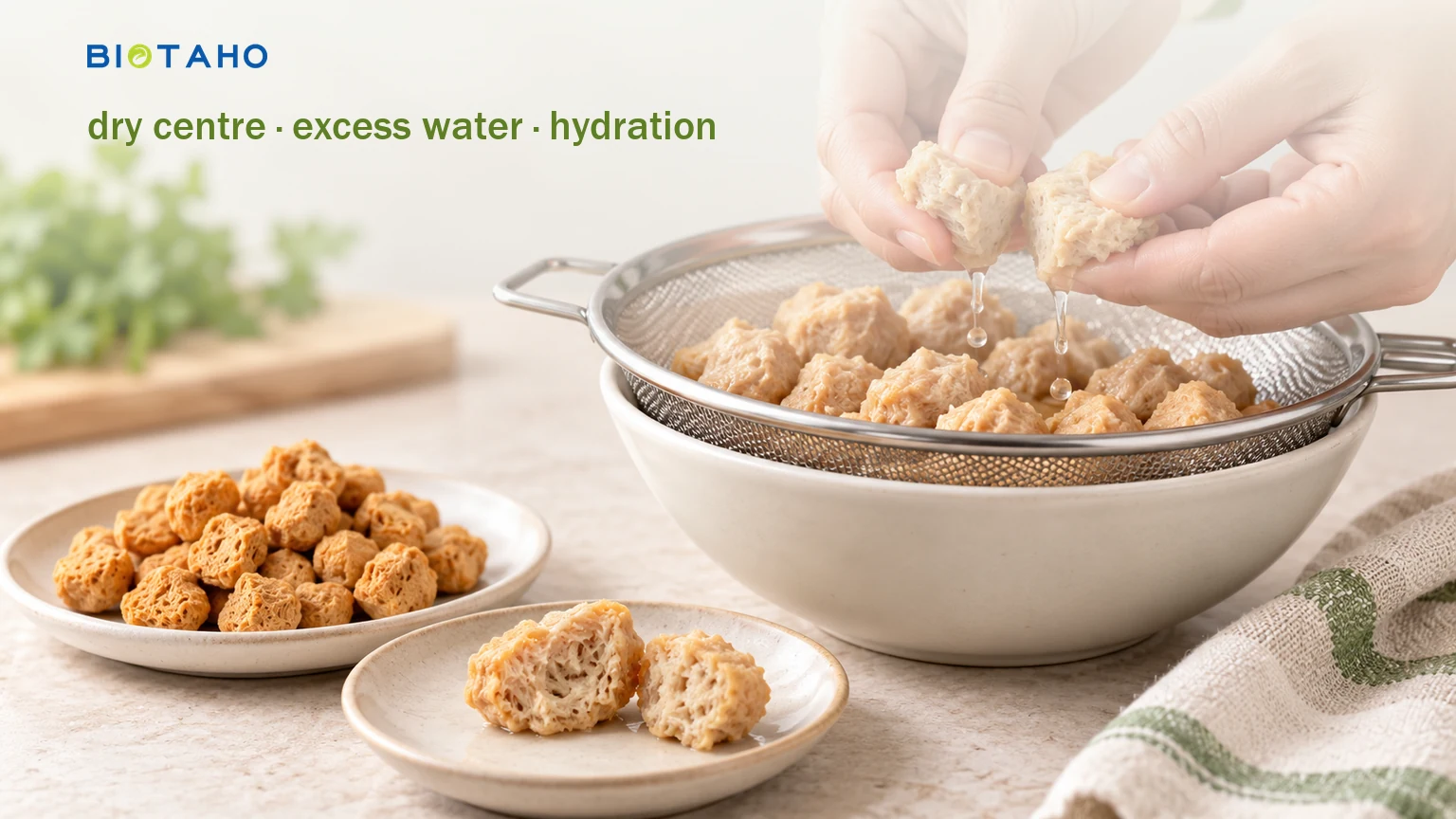
With the chunk format selected, hydrate it before building the curry. Thick coconut sauce is not a reliable place to soften dry pieces: the squash may become tender while the protein still has a dry centre. Separate preparation also lets you remove excess water before it dilutes the measured sauce ingredients.
The catering chunk page lists a hydration time of 60–65 minutes, while the granule page lists 40–55 minutes. Treat those as product planning windows, not complete preparation instructions. Obtain the current water quantity, temperature and method for the ingredient you use. In particular, the chunk window may extend the overall schedule beyond the recipe’s 45–60-minute estimate; hydration water is separate from the 250 ml used to cook the squash.
- Measure the dry chunks and hydrate or boil them using the water quantity and method specified on the pack.
- Cut open a large piece. Its centre should be hydrated, without a firm, dry core. Complete any additional cooking required by the directions.
- Drain, and rinse if directed. Let the pieces cool enough to handle.
- Gently squeeze out excess water without crushing the pieces, then set them aside while you start the curry.
The aim is a moist piece with no dry centre, but without loose water that will unexpectedly thin the sauce. Squeezing harder cannot correct incomplete hydration. Dassana’s soya chunks curry, listed in the references, illustrates separate boiling, draining, rinsing and squeezing; its timings should not replace those for your chosen blend.
Cook the squash before finishing the curry with soy
Once the chunks are prepared and drained, cook the squash in the aromatic base before adding coconut milk. This staggered order gives the raw vegetable time to soften while limiting unnecessary simmering of the hydrated protein. Use a wide, deep pan so you can turn the ingredients gently instead of repeatedly stirring through a crowded pot.
- Heat the oil over medium heat. Add the finely chopped onion and cook for about 5–7 minutes, stirring, until softened and translucent.
- Add the garlic and ginger and stir for about 30 seconds. Add the curry paste and cook for another minute, stirring so it does not catch. Start at the lower amount if the paste is hot or unfamiliar.
- Add the even 2 cm squash cubes and 250 ml water or vegan stock. Stir, cover and simmer gently for about 10–15 minutes. Check occasionally and add a splash of water if the pan starts to dry. A fork should enter the outside of a cube, with some resistance remaining in the centre.
- Stir in the coconut milk and prepared chunks. Simmer gently, partly covered, for about 8–12 minutes, until the squash is tender and the chunks have completed any cooking required by their directions. Turn carefully to keep the cubes intact.
- Fold in the spinach, if using, and let it wilt. Remove from the heat, then add the lime juice and 1 teaspoon soy sauce. Taste before adding the remaining soy sauce or any salt.
- Check that the squash cuts easily with a spoon but mostly holds its shape, the chunks are moist throughout, and the sauce coats both while still pooling around them. Serve with rice and coriander.
These times are checkpoints. Larger or uneven squash cubes can take longer; if the centres remain firm, continue cooking gently and check the liquid level instead of sharply raising the heat. Careful turning matters most near the end, when the squash edges soften and can break away into the sauce.
Thicken the sauce while keeping chunks and squash distinct
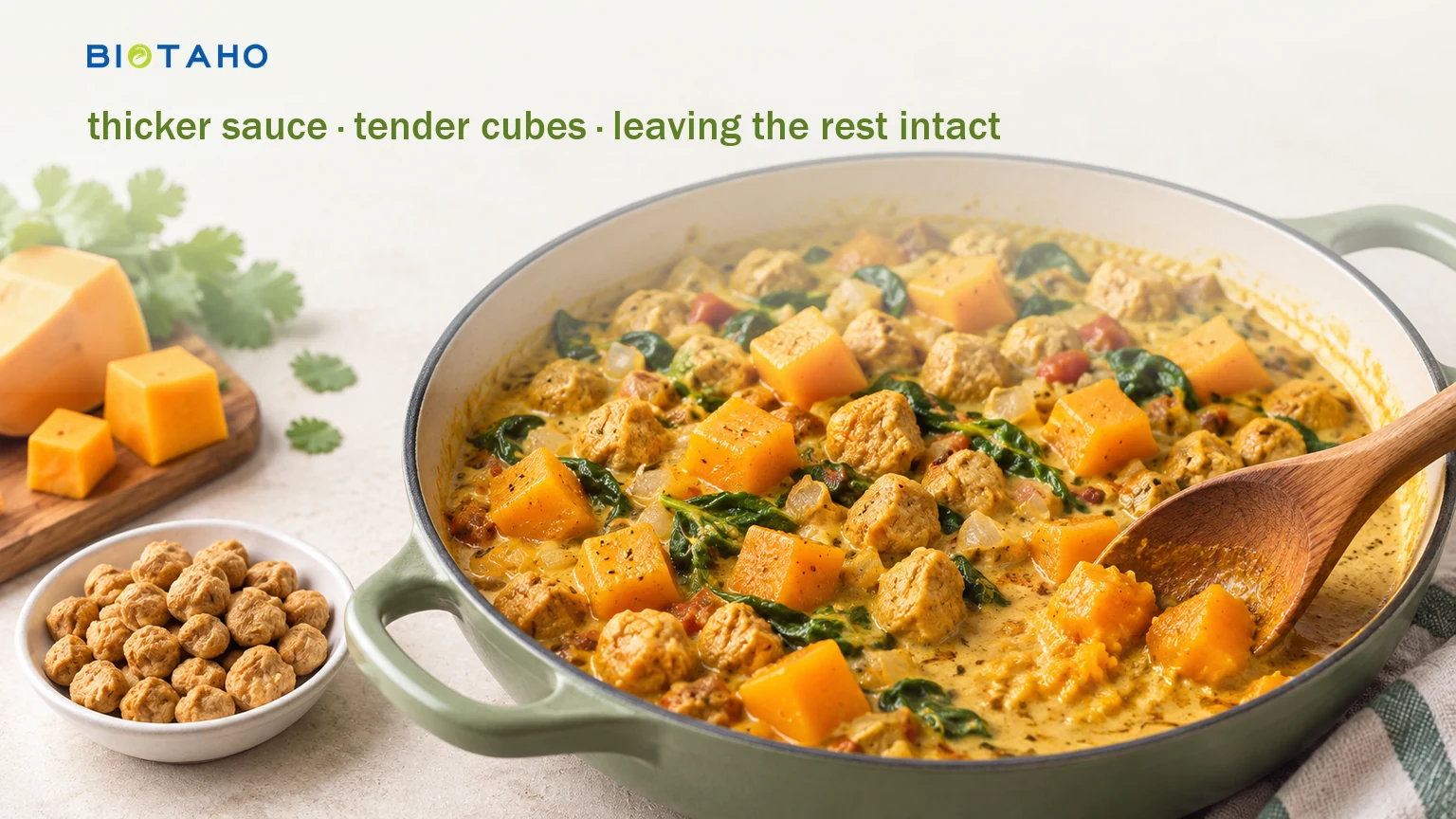
Once the squash is tender, assess the sauce before extending the simmer. Coconut milk supplies richness, while softened squash can supply body. To make a butternut squash curry with a thicker sauce, mash two or three tender cubes against the side of the pan and fold them back in. Leave the rest intact and avoid pressing the soy pieces.
This selective mashing lets you adjust thickness without cooking the entire pan until the squash collapses. The sauce should remain fluid enough to spoon over rice. If it feels heavy, add water in small splashes and taste again, since dilution may change the balance of lime, salt and curry paste.
| What you notice | Likely reason | Ajuste prático |
|---|---|---|
| Thin sauce | Excess liquid, including water retained by lightly drained chunks | Simmer briefly uncovered, or mash a few tender squash cubes |
| Very thick sauce | Reduction or too much squash broken into the sauce | Fold in water a little at a time |
| Hard chunk centres | Incomplete initial hydration | Remove the pieces and finish preparing them according to their directions before returning |
| Squash breaking apart | Prolonged cooking or vigorous stirring | Stop heavy stirring and finish as soon as everything is ready |
| Rich but flat flavour | Seasoning needs balancing | Taste, then adjust lime and salt separately in small additions |
Check the soy texture again when reheating
First judge the finished curry on rice, not only in the pan. The chunks should remain easy to distinguish from the tender squash, and there should be enough sauce to moisten the serving. If developing a repeatable version, note the dry chunk weight, hydration method, drained weight and any extra water added. These observations help separate an ingredient-preparation change from a sauce adjustment.
For leftovers, divide the curry into shallow containers and refrigerate within two hours, or within one hour when the outside temperature exceeds 90°F. Keep the refrigerator at 40°F or below. Reheat leftovers to 165°F, checked with a food thermometer; FDA also advises bringing sauces, soups and gravies to a boil when reheating. Stir carefully for even heating. A soft or chewy texture is not a safety check.
After reheating safely, reassess the proteína de soja texturizada alongside the squash. Add a little water if the sauce has thickened, and fold gently to avoid breaking the softened cubes. For a serving trial, compare the chunk firmness and sauce consistency with the freshly cooked portion before changing the next batch’s hydration or finishing time.
Perguntas frequentes
What does coconut milk do to curry?
It adds coconut flavour, richness and a creamy sauce around the squash and chunks. It can make the spices taste milder, but it does not remove the chilli from the dish.
How do I make a quick coconut curry?
Use ready-prepared squash cut into even pieces and chop the aromatics while the chunks hydrate. Do not shorten the ingredient’s required hydration or cooking steps; a longer chunk preparation window needs advance planning.
Is it better to use coconut milk or cream in a curry?
Coconut milk supplies both richness and liquid for this recipe. Cream makes a heavier sauce and needs additional water, so it is not a direct same-volume replacement without adjustment.
What are the ingredients for vegan coconut curry?
This version uses butternut squash, soy chunks, unsweetened coconut milk, onion, garlic, ginger and vegan red curry paste, with water or vegan stock. Lime juice and soy sauce finish the seasoning; spinach is optional.
What can I put in curry instead of meat?
Soy chunks provide the distinct bites intended here. Granules are another protein format, but their smaller pieces produce a finer curry and require their own preparation and liquid assessment.
How to prepare soya chunks for curry?
Follow the pack’s hydration or boiling directions, check a large piece for a dry centre, then drain and gently squeeze out excess water. Complete any required cooking before serving.
Referências
- Cookie and Kate: Thai red curry with vegetables — coconut milk and aromatic sauce ideas, plus checking curry paste for animal ingredients.
- Dassana’s Veg Recipes: soya chunks curry — an example of preparing chunks separately for a coconut-based curry.
- FDA: Manipulação Segura de Alimentos — chilling, refrigerator temperature and leftover reheating guidance.
- FDA: Alergias alimentares — soy and wheat allergens and reading ingredient labels.
To trial a chunk format in this curry, contact Baichuan about samples and current preparation directions.