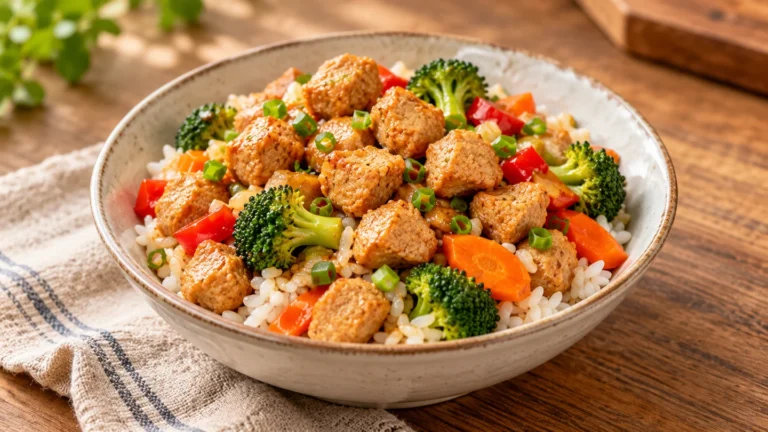
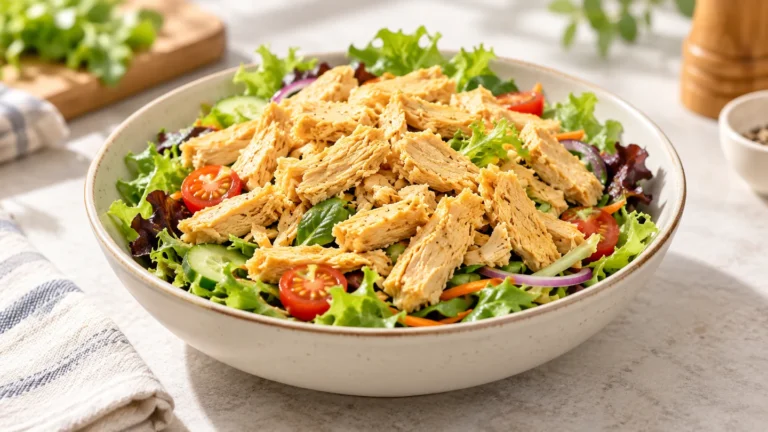
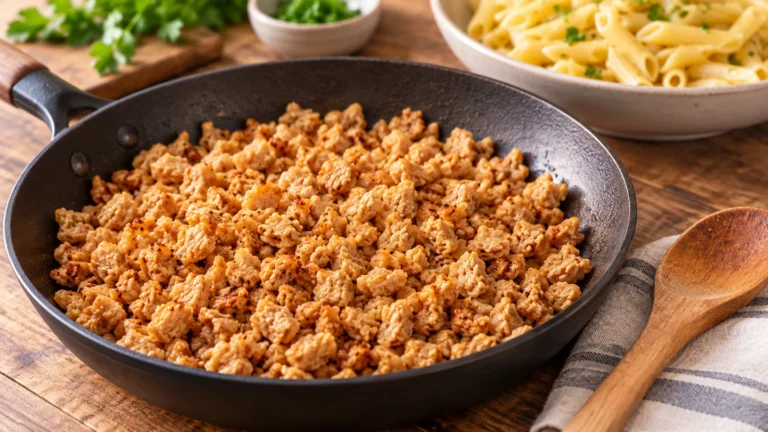
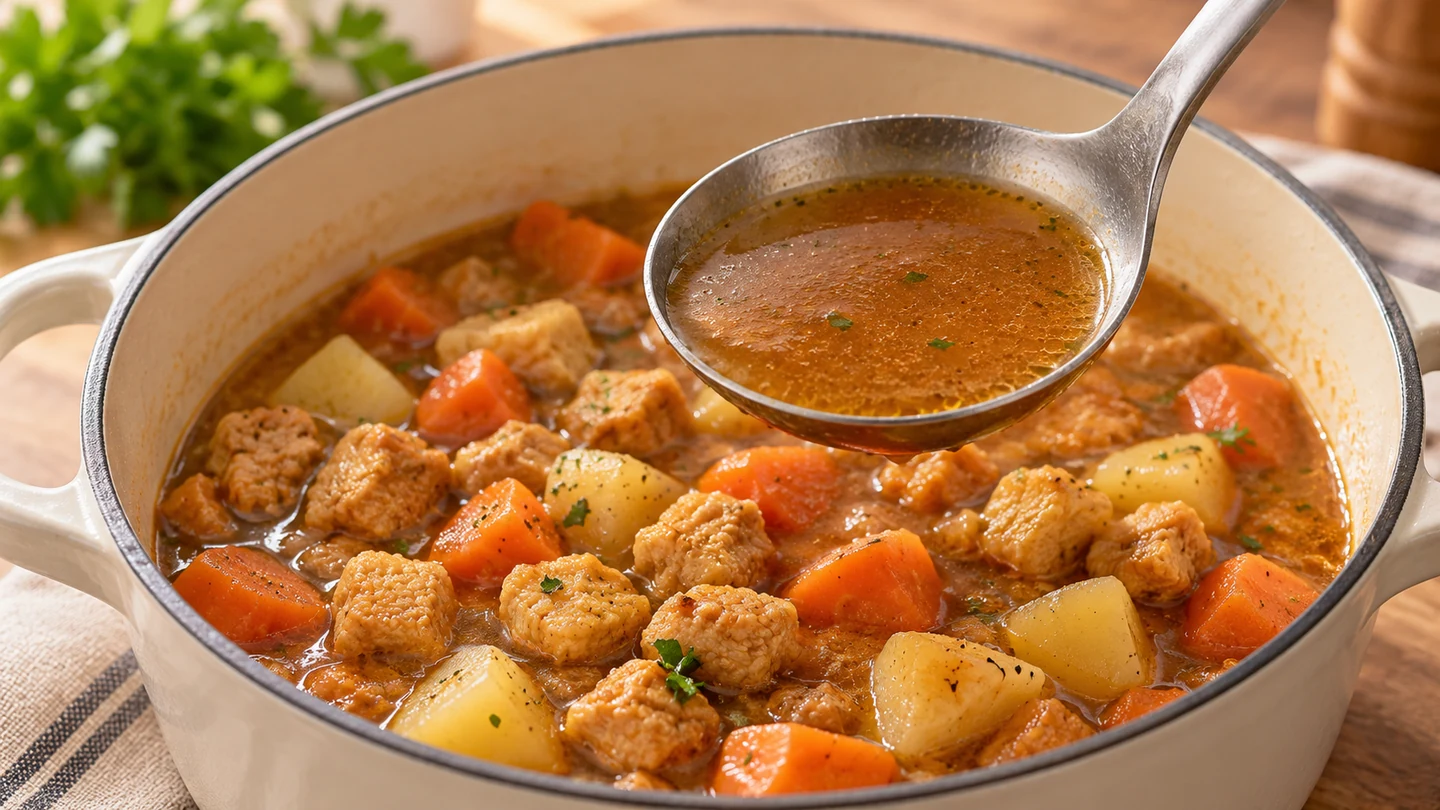
A rich gravy only goes so far if the soy chunks are bland or hard in the middle. Textured soy protein chunks need to be prepared through the center before they join the vegetables and broth. Choose pieces small enough to fit comfortably on a spoon. The recipe below explains the cooking order, with advice on preparing the soy and keeping the gravy at the consistency you want.
Vegan beef stew uses a plant-based substitute and meat-free stock. Holy Cow Vegan’s recipe soaks and drains soy chunks, lightly coats them in flour, then browns them before adding vegetables and stock. If you use a fibrous soy protein chunk, follow its own preparation directions first. Simmering in thick gravy will not reliably soften a piece that was not fully rehydrated.
Which soy protein chunks suit a beef-style stew?
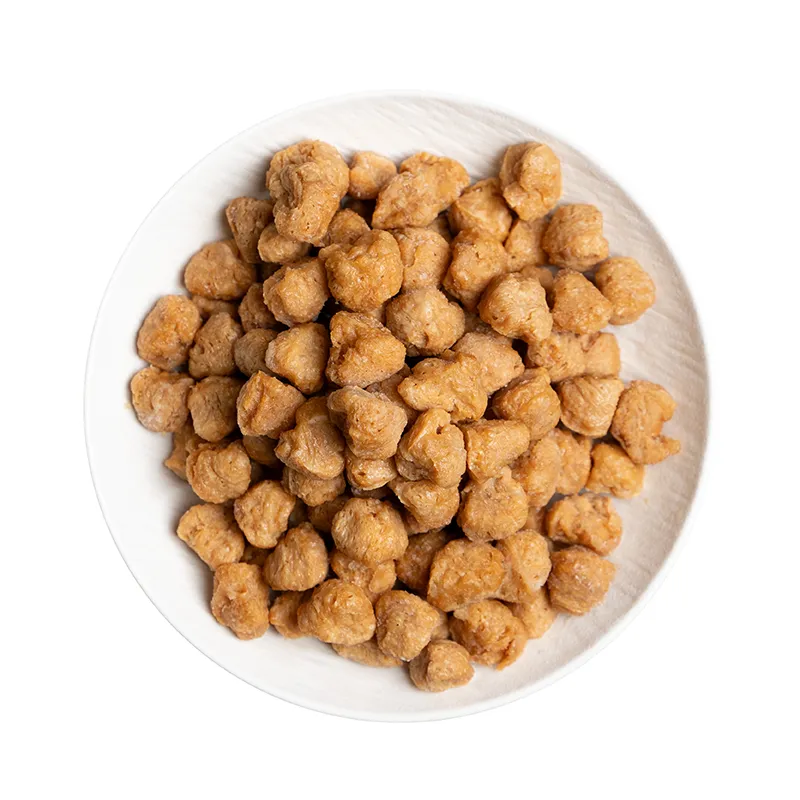
Baichuan’s soy fiber protein chunks are small, cubed pieces listed for plant-based meat and catering food. Their published hydration range is 60–65 minutes. If you try them in a stew, use their preparation directions rather than a shorter soak taken from another recipe. Then check the texture after simmering; the product description does not establish how they will behave at every cooking time.
Judge soy protein chunks after preparation, when you can check their size and bite. With SoyaFiber protein, follow the selected grade’s rehydration method and taste a prepared piece before adding it to the pot. Compare it again after simmering. The guide to plant-based beef chunks covers larger-piece selection for commercial recipes, where holding and reheating may matter as much as the initial cook.
What ingredients do you need for a soy-chunk stew?
The quantities below come from Vaishali Honawar’s Vegan Beef Stew at Holy Cow Vegan. The recipe has not been tested with Baichuan ingredients. If you substitute a Baichuan product, follow its preparation method and check how it cooks in the stew.
| Ingredient group | Published quantities |
|---|---|
| Protein and coating | 2 cups dry TVP chunks; ¼ cup flour |
| Cooking fat | 2 tbsp neutral oil; optional 2 tbsp vegan butter to finish |
| Vegetables | 1 large onion, 2 medium carrots, 3 celery stalks, 5 garlic cloves and 1 lb new potatoes |
| Herbs and seasoning | 2 tbsp mixed herbs, divided; 2 tbsp soy sauce; salt and pepper to taste |
| Broth and flavour | 4–5 cups vegetable or mushroom stock; 2 tbsp tomato paste; optional ½ cup red wine |
| Garnish | 2 tbsp chopped parsley |
The recipe allows regular or gluten-free all-purpose flour. For a gluten-free stew, also check the soy sauce, stock and other ingredients. If adding wine, choose one suitable for a vegan diet.
How do you prepare and cook the stew?
- The source soaks its soy chunks in very hot salted water for 15–20 minutes. Drain and press lightly to remove excess liquid. Follow your product’s directions if they differ.
- Toss the prepared pieces with the flour, half the herbs, salt and pepper. Brown them in 1 tablespoon of the oil, working in batches if needed. Set the pieces aside and keep any flour left in the bowl.
- Add the remaining oil to the pot. Cook the onion, carrot, celery and garlic until the onion softens. If using wine, add it and let the liquid reduce as directed in the source.
- Stir in the tomato paste and remaining herbs. Return the soy pieces and remaining flour, then add the potatoes, soy sauce and initially 4 cups stock.
- Bring to a boil, cover and cook until the potatoes are tender. The source suggests about 10 minutes for this stage, but potato size and variety affect the time. Check with a fork rather than relying only on the clock.
- Adjust the broth, stir in the optional vegan butter and finish with parsley.
There is no tough cut of meat to tenderize here. Once the prepared soy joins the gravy, watch the potatoes and protein separately instead of assuming a longer simmer will improve both. Taste a soy piece near the start and again toward the end to see how its flavor and texture change.
How do you thicken the gravy without overcooking the soy?
The flour coating thickens the gravy as it cooks. If it becomes too thick, add a little stock and taste again; evaporation and liquid absorbed by the soy can both affect the result. If the potatoes are done but the gravy is still thin, adjust the thickener separately. Boiling the whole pot longer may soften the vegetables and soy more than you want.
| Result wanted | Approach | What changes? |
|---|---|---|
| A thicker stew | Use the recipe’s flour coating and allow the gravy to cook | Thicker liquid around distinct pieces |
| A flour-free variation | Use a separately designed starch slurry or mashed potato method | Different thickening behaviour; quantities need adjustment |
| A lighter soup | Add more suitable broth gradually | More liquid per serving and a less concentrated flavour |
| A reheated serving | Check consistency again during reheating | Some additional broth may be needed |
For a lighter vegan beef soup, add broth gradually and taste as you go. Diluting a plant-based stew changes both the consistency and the seasoning. Check the stock’s salt level before reaching for more soy sauce.
How do you keep the whole pot vegan?
Use vegetable or mushroom stock, vegan butter if needed, and sauces without animal ingredients. Vegetarian recipes may still include dairy. Check the protein too: Baichuan’s small soy fiber chunks list wheat gluten and wheat starch as well as soy ingredients, so they are not gluten-free. FDA’s guidance on food allergies explains the major U.S. allergens; check the rest of the recipe as well.
Frequently asked questions
What can I use as a vegan substitute for beef in stew?
Soy chunks, seitan pieces, mushrooms and prepared plant-based beef substitutes can all appear in meatless stew recipes. Choose a method written for the ingredient you have. Mushrooms give a different bite and nutritional profile from soy chunks.
How to make a vegan beef stew?
Use a meat-free base, prepare the chosen protein, cook the vegetables and combine them with stock and seasoning. The credited recipe above provides quantities and an order of cooking.
What not to put in beef stew?
For a vegan version, avoid meat stock, dairy butter and sauces containing animal ingredients. Also avoid adding delicate vegetables too early if they will become overly soft before the potatoes cook.
How can I thicken beef stew without flour?
A starch slurry or a little mashed potato can thicken a flour-free version. Add it gradually and cook it properly before judging the consistency. Since that changes the linked recipe, adjust the amount for your pot rather than using the flour quantity unchanged.
Should I add soy sauce to beef stew?
Yes, it adds salt and savory flavor, and the linked recipe includes it. Taste the stock before adding more. If you need to avoid soy or gluten, choose an alternative that meets that particular requirement.
What gives beef stew the best flavor?
In this plant-based version, browned soy pieces, cooked aromatics, tomato paste, herbs and a suitable stock work together. Long cooking alone does not guarantee a better result.
Do I need to boil soya chunks before cooking?
Follow the packet directions. Some products need boiling; others soften in very hot water. Check a larger piece through the center before it goes into the stew so you are not relying on the gravy to finish that preparation.
How many minutes should I soak soya chunks?
The Holy Cow Vegan recipe uses a 15–20-minute soak for its ingredient. Baichuan’s small soy fiber chunks have a different published hydration range. Follow the current directions for the product you buy, including water, temperature and time, and check the center before starting the stew.
Choosing soy chunks that suit your stew
Taste a spoonful with chunks, vegetables and gravy together. The pieces should be easy to eat and fully softened, with enough texture left after simmering. If you will hold or reheat the stew, test that stage too and follow food-safety guidance. When asking the Baichuan team for samples, describe the piece size you need and how long the stew will cook and wait before serving. Use the public recipe for the gravy and cooking order, then make any ingredient adjustments after trying the selected soy product.