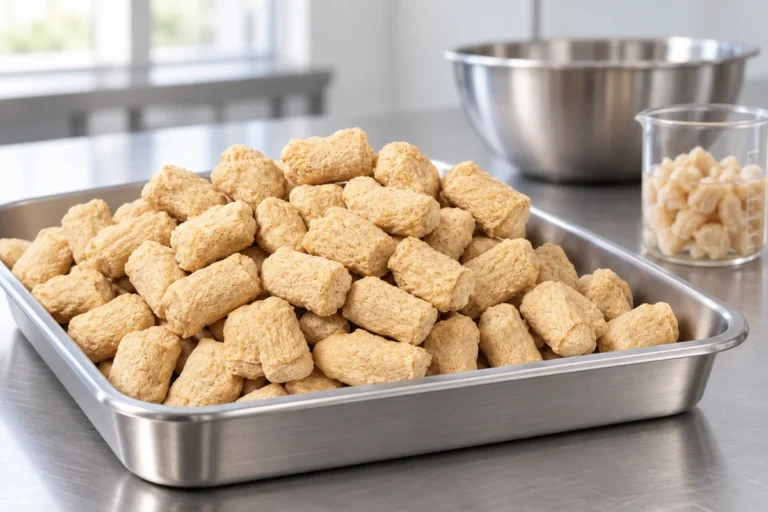
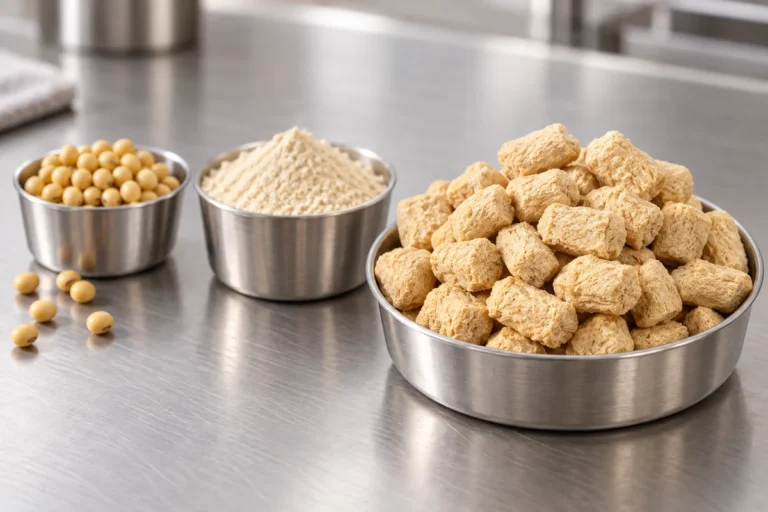
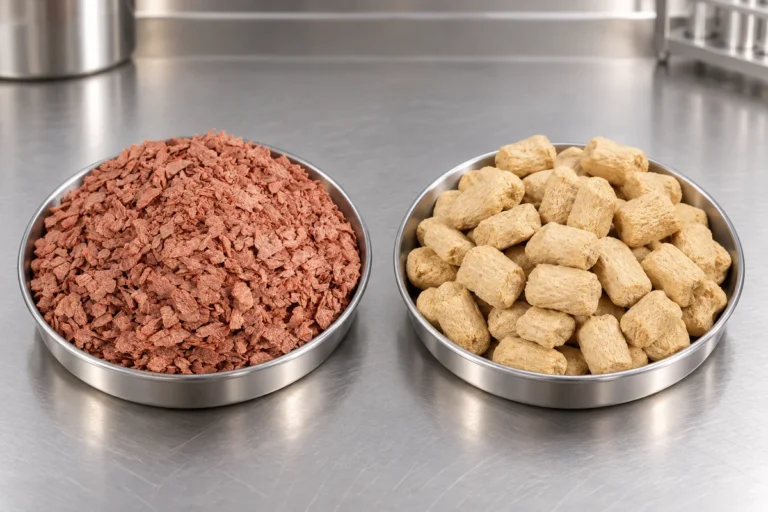
When a procurement lead in Rotterdam received a “verified” supplier’s COA showing 58% protein and confidently placed a 40-ton order, he discovered on retest that the actual figure was 49% — a gap that forced a reformulation of his entire plant-based burger line and cost him a listed-retailer contract. The supplier was not a fraud; it was a trader reselling unknown mill output. The real failure was never verifying the factory behind the document, which is exactly how a buyer should screen a TVP manufacturer in China.
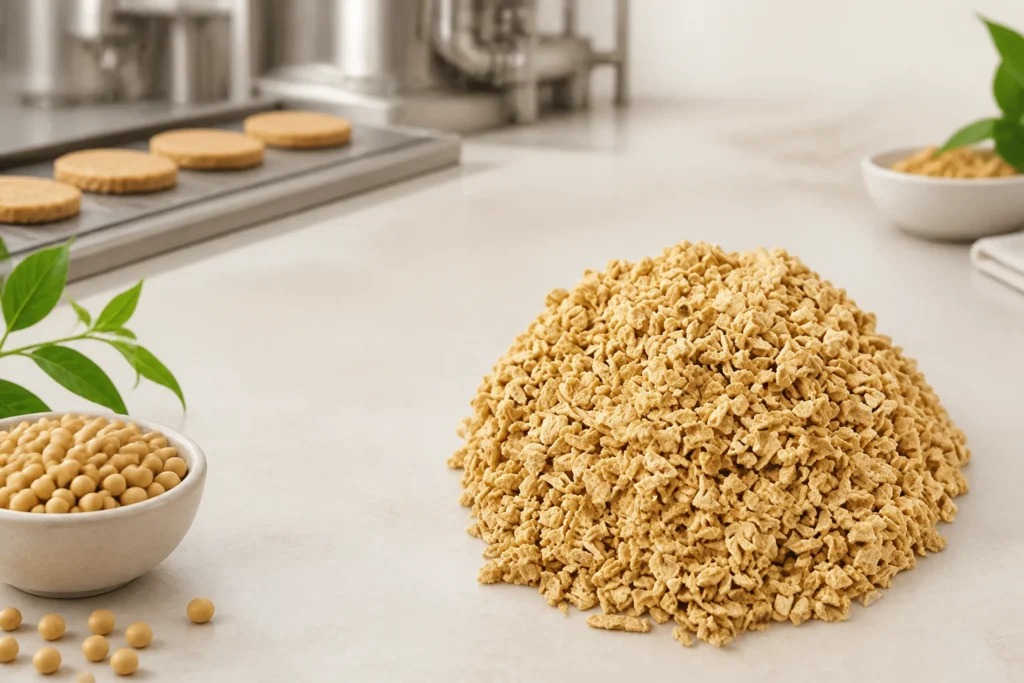
Factory Capability: Who Actually Makes the TVP?
Reliability starts with ownership of the extrusion line. A true manufacturer controls defatted soy sourcing, extrusion parameters and drying; a trader controls a WeChat group. Ask for the production license (SC number in China), plant photos, and annual capacity. Capacity above 10,000 tons/year with multiple lines signals resilience during demand spikes.
Go one level deeper than the brochure. A genuine extrusion operation can describe its twin-screw configuration, barrel zone temperatures (typically 120–160°C in the final zones for low-moisture texturization), screw speed range, die geometry and cutter arrangement without hesitation. It can tell you the protein content of the incoming defatted soy flour or soy protein concentrate — usually 48–52% for flour-based feedstock and 62–70% for concentrate — because that raw material ceiling determines the finished specification. If a contact cannot answer whether the line runs low-moisture or high-moisture extrusion, you are speaking to a reseller, and every quality problem downstream will be answered with “the factory says it is fine.”
Drying and cooling capacity matters as much as extrusion. Product leaving the die carries 18–25% moisture and must be dried to ≤10% and cooled before bagging; undersized dryers force operators to either slow the line or bag warm product, and warm product bagged into a sealed liner condenses and cakes during ocean transit. Ask how many drying tunnels feed each extruder and what the residence time is. Ask what happens during a power interruption — a mature plant has a documented restart and hold-product procedure rather than an improvised one.
Spec Verification: Numbers You Can Retest
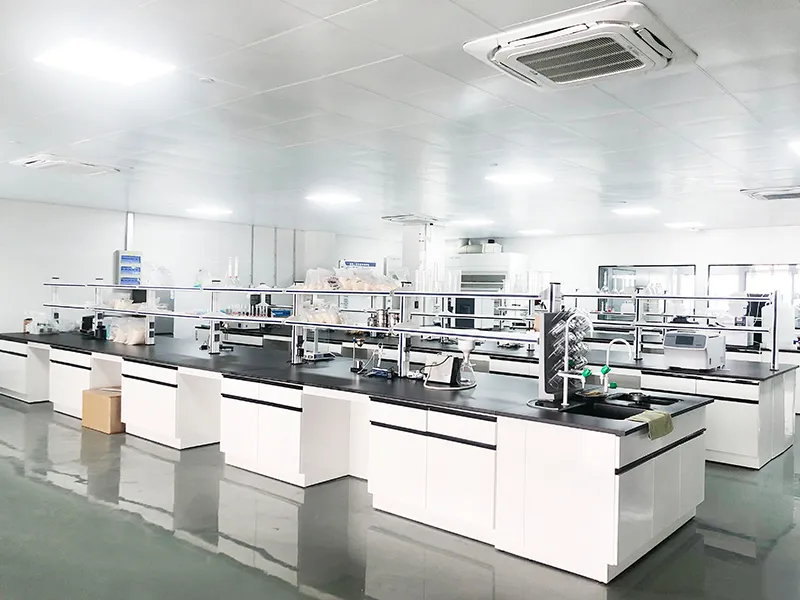
Core specs must be measurable by AOAC methods: protein (Dumas/AOAC 992.23), moisture (≤10%), fat, crude fiber, and — most overlooked — rehydration integrity after the third cook. A supplier confident in its process welcomes your lab retest; one that delays is a red flag.
Two specification traps deserve special attention. First, protein basis: 55% “as is” and 55% “dry basis” are not the same number, and at 9% moisture the difference is roughly five percentage points. Always require the basis to be stated on the spec sheet and the COA. Second, mesh and particle distribution: a granule stated as “10–20 mesh” should arrive with a documented sieve analysis, because excessive fines below 40 mesh behave completely differently in a hydration tank, producing sludge instead of structured bite.
Rehydration integrity is the parameter most buyers forget to contract. Run a controlled test — 1 part product to 2.5–3.0 parts 80°C water, 12 minutes soak, drain, then simulate your process (retort, fry or steam) three times. Weigh the intact fraction retained on a coarse sieve. Reliable material holds ≥90% structure after three cycles; weak texturization collapses to 70% or less and shows up in your finished product as mush, not fibre.
| Parameter | Acceptable Range | Test Method |
|---|---|---|
| Protein (dry basis) | 50–70% | AOAC 992.23 |
| Moisture | ≤10% | AOAC 925.10 |
| Total plate count | ≤10⁴ CFU/g | ISO 4833 |
| Rehydration integrity | ≥90% after 3 cycles | In-house cook test |
| Fat (residual) | ≤1.5% | AOAC 920.39 |
| Salmonella | Negative / 25 g | ISO 6579-1 |
Documentary Compliance
Before deposit, secure the spec sheet, COA, allergen statement, microbiological report and certificates. Our documents checklist explains what each must contain. Baichuan issues full export documentation including MUI Halal and IFS certificates.
Read certificates the way an auditor does, not the way a salesperson presents them. Every legitimate certificate carries an issuing body, a certificate number, a scope statement and a validity window. The scope line is where most problems hide: an ISO 9001 certificate that covers “trading of food ingredients” does not cover manufacturing, and an ISO 22000 certificate issued to a parent company does not automatically cover the specific plant address that will produce your goods. Match the address on the certificate to the address on the invoice and packing list. If they differ, ask why in writing.
Certification Chain: What Each Standard Actually Proves
Buyers often treat certificates as a single badge. They are not interchangeable. HACCP proves the plant has identified hazards and set critical control points — for TVP typically the metal detection step, the drying step and incoming raw material screening. ISO 22000 wraps HACCP inside a management system with documented verification, traceability and recall procedures. ISO 9001 addresses consistency of process rather than food safety directly, which is why it correlates strongly with batch stability. ISO 14001 and ISO 45001 cover environmental and occupational health systems; they will not appear in a customs file, but retail buyers increasingly request them during ESG screening.
HALAL certification, and specifically MUI Halal for Indonesia and much of Southeast Asia, requires verified absence of prohibited inputs across processing aids and shared equipment. IFS is a retailer-driven standard that European chains often treat as the entry ticket for private-label listing. A manufacturer holding HACCP, ISO 9001, ISO 22000, ISO 14001, ISO 45001, HALAL, MUI Halal and IFS simultaneously has been audited from several independent directions, which is a far stronger signal than any single certificate.
Batch Stability & Sample Testing
One good batch proves nothing; stability across six shipments proves a system. Run sample testing on two consecutive lots and compare COA-to-retest variance. Variance under 3% on protein is the marker of a mature line.
Build a simple variance log from day one. Record, per lot: protein, moisture, bulk density, sieve distribution, rehydration ratio and intact fraction. After four lots you will see whether the plant is running a controlled process or chasing the spec. A well-run line typically holds protein within ±1.5 percentage points, moisture within ±1 point, and bulk density within ±5%. Drift in bulk density is an early warning that extrusion conditions have changed, and it usually shows up before protein does.
Note that the first sample a supplier sends is often hand-selected. Insist that the second evaluation sample be drawn from a commercial production lot with a matching COA and lot number, and that you can retest that same lot number when the container arrives. That single condition eliminates the majority of “golden sample” disputes.
Export Experience
Ask for bill-of-lading references and destination markets. A supplier with container shipments to the EU, US and Southeast Asia understands export packaging and customs documentation — a capability that protects your lead time.
Export competence is operational, not decorative. A factory that regularly ships to your region will already know the certificate of origin format you need, whether your port requires a fumigation or non-wood packaging declaration, and how to align the HS code with your customs broker’s expectation. Inexperienced suppliers create delays that cost more than any per-kilogram discount: a container held for three weeks pending a corrected phytosanitary detail can wipe out an entire year of negotiated savings.
Five Reliability Checks
- Confirm the SC production license and plant ownership.
- Retest the first two COAs in your own lab.
- Require Halal/HACCP/ISO 22000 certificates with traceable numbers.
- Compare two consecutive batches for variance.
- Verify export references to your target market.
Baichuan provides textured soy protein and fibrous soy protein with HACCP, ISO 22000, ISO 9001 and Halal certification, supported by application testing for global B2B buyers — the reliability profile the five checks above are designed to confirm.
How to Structure the Selection Process
Treat supplier selection as a staged funnel rather than a single decision. Stage one is a paper screen: license, certificate scope, specification sheet and a sample COA. Stage two is a laboratory screen on a production-lot sample, run against your own methods rather than the supplier’s. Stage three is a pilot run of one to three tons through your actual line, measuring yield, breakage and seasoning uptake instead of laboratory values alone. Stage four is a two-container validation, where the only question is whether lot two matches lot one. Only after stage four should annual volume be committed.
This sequence keeps commercial pressure aligned with technical evidence. It also gives you a clean basis for comparing suppliers whose quotes look similar on paper but diverge sharply once yield and variance are measured — the economics of which are worked through in the cost guide. Buyers who follow the funnel typically pay slightly more per kilogram and materially less per finished kilogram, while carrying far less recall exposure. That is the trade a mature procurement organisation should be making.
FAQ
How do I verify a Chinese TVP manufacturer is real?
Request the SC license number, plant photos and a live video call from the production floor; cross-check the license on the regulator database. Ask the operator on camera to show the extruder nameplate and the day’s batch record. See our documents guide.
What protein level should reliable TVP have?
50–70% on a dry basis depending on format; fibrous soy protein sits at the top (60–70%). Lower figures quietly raise your cost-per-usable-kg because you compensate with additional protein elsewhere in the formulation.
Is all TVP the same?
No. TVP varies significantly in its base ingredient (soy, pea, wheat), protein content, particle size (granules, chunks, strips), hydration rate, and texture. Quality, flavor neutrality, and batch stability also differ greatly depending on the manufacturer and the extrusion technology used.
What is the most popular protein in China?
Pork is historically the most popular animal protein in China. However, among plant-based proteins, soy protein is by far the most widely consumed and produced, deeply rooted in both traditional diets and modern food manufacturing.
Where do you buy TVP?
Consumers can buy packaged TVP in supermarkets, health food stores, or online retailers. B2B food manufacturers, plant-based meat brands, and distributors typically source bulk TVP directly from specialized manufacturers and ingredient suppliers, often importing from major producing countries like China.
Is it okay to eat TVP every day?
Yes, it is generally safe and healthy to eat TVP every day as part of a balanced diet. It is a highly nutritious, low-fat, and cholesterol-free source of complete protein, though individuals with soy allergies or those monitoring highly processed food intake should adjust accordingly.
Is TVP more processed than tofu?
Yes. Tofu is minimally processed by simply curdling soy milk and pressing the curds into blocks. TVP undergoes a more complex industrial extrusion process that involves extracting the soybean oil, taking the defatted soy flour, and applying high heat and pressure to create a dry, meat-like structure.
References
- ISO 22000:2018 — Food safety management systems
- ISO 9001:2015 — Quality management systems
- ISO 4833-1 — Enumeration of microorganisms
- ISO 6579-1 — Detection of Salmonella spp.
- AOAC 992.23 — Protein (Dumas) determination
- AOAC 925.10 — Moisture determination
- Codex Alimentarius — General Principles of Food Hygiene